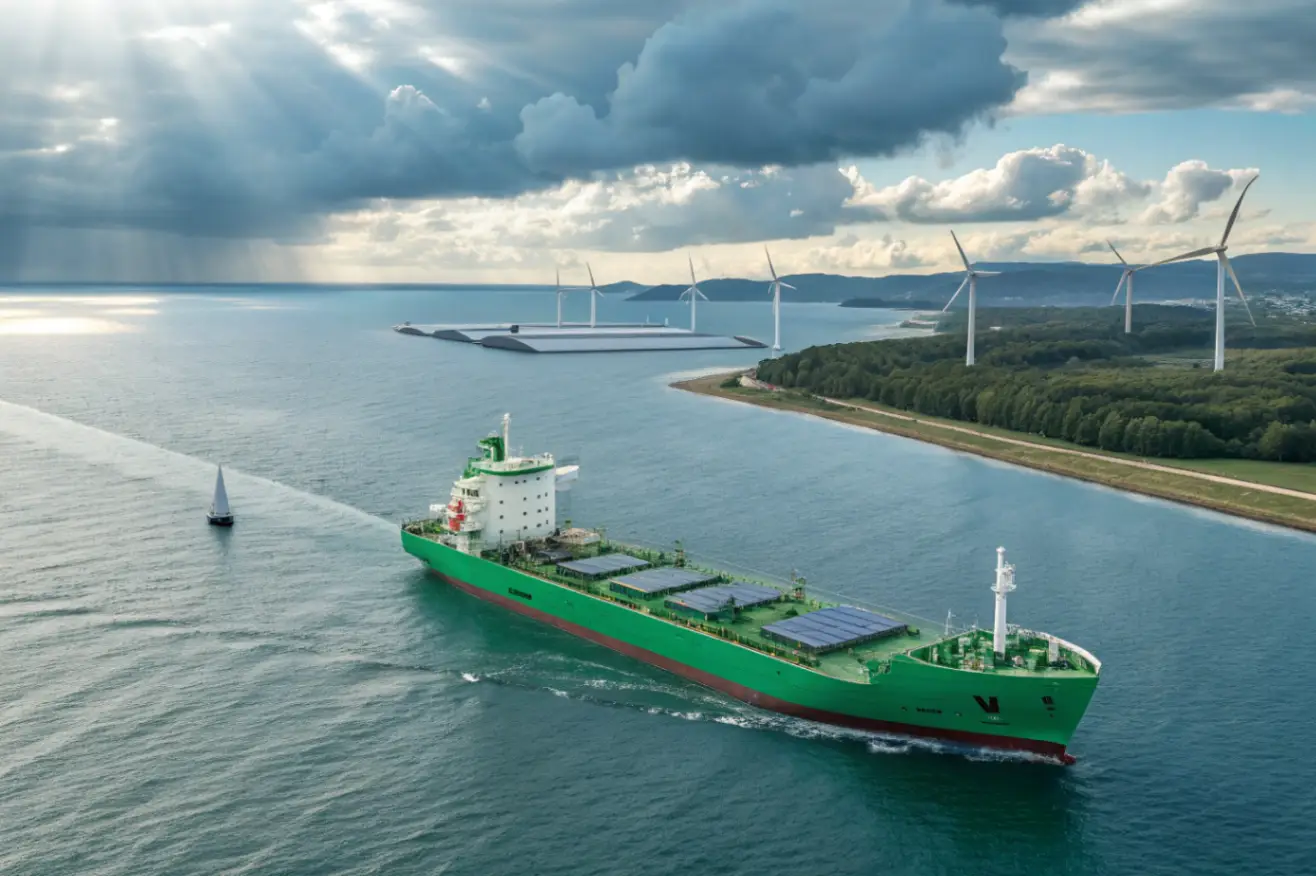
The global maritime industry is entering a decisive phase. By 2026, green marine transport is no longer a conceptual ambition but a strategic necessity driven by regulatory pressure, investor expectations, and technological maturity. Shipping companies, port operators, financiers, and policymakers are converging around a shared goal: reducing environmental impact while maintaining economic viability in one of the world’s most capital-intensive industries. Sustainable shipping strategies are now inseparable from innovative financial models, as decarbonization requires not only new technologies but also new ways of funding them.
This article explores how green marine transport is evolving in 2026, focusing on sustainability strategies, regulatory frameworks, technological innovation, and the financial mechanisms enabling this transition. The emphasis is on practical, system-level change rather than isolated initiatives, reflecting how the maritime sector is redefining competitiveness in a low-carbon global economy.
The Global Shift Toward Green Marine Transport
Green marine transport has moved from niche experimentation to mainstream strategic planning. International shipping accounts for nearly three percent of global greenhouse gas emissions, and this figure placed the industry under increasing scrutiny throughout the early 2020s. By 2026, sustainability is no longer driven solely by environmental concerns but by market forces, compliance risks, and access to capital.
Shipowners now face a dual challenge. On one hand, they must comply with stricter international regulations, including carbon intensity targets and fuel standards. On the other hand, they must remain cost-competitive in a market characterized by volatile freight rates and rising operational expenses. Green marine transport strategies therefore focus on long-term efficiency rather than short-term cost reduction. Energy efficiency, alternative fuels, and digital optimization are increasingly seen as investments in resilience.
Cargo owners also play a decisive role. Large multinational shippers are integrating maritime emissions into their Scope 3 reporting and favoring carriers with transparent decarbonization pathways. This shift in demand reinforces the idea that sustainable shipping is not just a regulatory obligation but a commercial advantage. By 2026, environmental performance is directly linked to contract access, brand reputation, and long-term partnerships across supply chains.
Regulatory Frameworks and Emission Targets in Maritime Shipping
Regulation is one of the most powerful drivers of green marine transport. International, regional, and national authorities have introduced overlapping frameworks that collectively reshape how shipping companies operate and invest. The International Maritime Organization remains central, particularly through its revised greenhouse gas strategy, which sets ambitious emission reduction targets for mid-century while tightening interim requirements.
In practice, regulatory pressure manifests through technical efficiency standards, operational carbon intensity indicators, and emerging market-based mechanisms. These measures directly influence vessel design, route planning, and fuel choices. Compliance is no longer a static checklist but an ongoing performance metric that affects asset valuation and fleet deployment decisions.
To illustrate the regulatory landscape shaping sustainable shipping in 2026, the following table summarizes key frameworks and their practical implications for shipowners and operators.
| Regulatory Initiative | Scope and Coverage | Key Requirements | Impact on Shipping Strategy |
|---|---|---|---|
| IMO Carbon Intensity Indicator (CII) | Global | Annual vessel rating based on emissions per transport work | Incentivizes slow steaming, retrofits, and fleet renewal |
| IMO Energy Efficiency Existing Ship Index (EEXI) | Global | Technical efficiency limits for existing ships | Drives engine power limitation and technical upgrades |
| EU Emissions Trading System (Maritime) | Regional (EU) | Carbon pricing on maritime emissions | Increases fuel costs, favors low-carbon vessels |
| FuelEU Maritime | Regional (EU) | Gradual reduction in fuel greenhouse gas intensity | Accelerates adoption of alternative fuels |
| National Green Port Policies | National / Local | Shore power, emission controls, port incentives | Encourages port-vessel sustainability alignment |
These frameworks collectively push the industry toward measurable and transparent emission reductions. Importantly, regulation also shapes financial risk. Vessels that fail to meet efficiency standards face higher operational costs, limited port access, and declining charter attractiveness. As a result, regulatory compliance is now deeply embedded in strategic planning, fleet valuation, and long-term financing decisions.
Alternative Marine Fuels and Propulsion Technologies
The transition to green marine transport hinges on fuel transformation. Conventional heavy fuel oil is steadily losing its dominance as shipowners experiment with lower-carbon and zero-carbon alternatives. By 2026, the fuel landscape is characterized by diversification rather than a single dominant solution, reflecting differences in vessel types, trading routes, and regional infrastructure readiness.
Alternative fuels offer varying benefits and challenges. Liquefied natural gas remains a transitional option due to its lower carbon intensity compared to traditional fuels, though concerns about methane slip persist. Methanol has gained traction because of its relative ease of handling and compatibility with existing engine designs. Ammonia and hydrogen represent long-term zero-carbon solutions, but their adoption depends heavily on safety frameworks, fuel availability, and scalable production.
Within this evolving ecosystem, several propulsion-related strategies are emerging as core components of sustainable shipping roadmaps:
- Dual-fuel engine systems that allow flexibility between conventional and alternative fuels.
- Wind-assisted propulsion technologies, including rotor sails and rigid wings.
- Battery-hybrid systems for short-sea shipping and port operations.
- Fuel cell applications for auxiliary and propulsion power.
These technologies are rarely implemented in isolation. Instead, shipowners increasingly adopt hybrid solutions that combine fuel flexibility, energy efficiency, and digital control systems. This integrated approach allows gradual decarbonization while managing technical and financial risk. Importantly, alternative fuel adoption also influences vessel design, crew training, safety procedures, and port infrastructure, reinforcing the systemic nature of green marine transport.
Digitalization and Data-Driven Sustainability in Shipping
Digital transformation is a critical enabler of sustainable shipping. While alternative fuels attract significant attention, operational efficiency improvements enabled by data analytics often deliver immediate emission reductions at comparatively low cost. By 2026, digital tools are deeply embedded in vessel operations, fleet management, and regulatory reporting.
Advanced monitoring systems provide real-time insights into fuel consumption, engine performance, and voyage efficiency. These data streams support optimized routing, weather-based speed adjustments, and predictive maintenance. Even marginal efficiency gains can translate into substantial emission reductions when applied across large fleets and extended operating periods.
Beyond onboard systems, digital platforms facilitate transparency and compliance. Automated reporting tools simplify interaction with regulators and charterers, reducing administrative burden while improving data accuracy. Digital twins and simulation models also support investment decisions by allowing shipowners to evaluate retrofit options, fuel scenarios, and regulatory impacts before committing capital.
In the context of green marine transport, digitalization functions as both a technical and financial instrument. Accurate performance data reduces uncertainty for investors and lenders, enabling more favorable financing terms for sustainable projects. As a result, digital maturity increasingly influences access to green capital and participation in sustainability-linked financial structures.
Innovative Financing Models for Sustainable Shipping
Decarbonizing maritime transport requires unprecedented levels of investment. New vessels, alternative fuel systems, retrofits, and digital infrastructure all demand significant capital outlays. Traditional financing models, however, are often ill-suited to the long payback periods and technological uncertainty associated with green marine transport. By 2026, innovative financial mechanisms play a decisive role in bridging this gap.
Green bonds and sustainability-linked loans have become central tools for funding sustainable shipping projects. These instruments tie financial terms to environmental performance indicators, aligning the interests of shipowners and capital providers. Export credit agencies and multilateral development banks also contribute by de-risking early-stage technologies and supporting infrastructure development.
Private equity and institutional investors increasingly apply environmental, social, and governance criteria when allocating capital. Shipping companies with credible decarbonization strategies benefit from lower cost of capital and broader investor interest. Conversely, fleets heavily exposed to carbon-intensive assets face rising financing costs and reduced refinancing options.
Innovative financing also extends beyond debt instruments. Leasing structures, public-private partnerships, and pay-as-you-save models enable technology adoption without full upfront investment. These approaches distribute risk across stakeholders and accelerate deployment of sustainable solutions, reinforcing the financial foundations of green marine transport.
Port Infrastructure and the Role of Green Corridors
Ports are pivotal to the success of sustainable shipping strategies. Green marine transport cannot be achieved solely at sea; it requires coordinated investment in port infrastructure, energy systems, and logistics networks. By 2026, ports increasingly function as energy hubs, supporting alternative fuels, shore power, and digital connectivity.
The concept of green shipping corridors exemplifies this integrated approach. These corridors connect specific ports through agreed sustainability standards, alternative fuel availability, and aligned regulatory frameworks. By focusing investment along defined routes, stakeholders reduce uncertainty and create scalable models for decarbonized maritime transport.
Port authorities also influence sustainability through incentive structures. Reduced port fees, priority berthing, and infrastructure access reward environmentally efficient vessels. Such measures accelerate fleet renewal and encourage early adoption of green technologies. Importantly, ports serve as convergence points for public policy, private investment, and technological innovation, making them strategic anchors of green marine transport ecosystems.
Risk Management, Competitiveness, and Long-Term Outlook
Transitioning to sustainable shipping involves substantial risk, including technological uncertainty, regulatory evolution, and market volatility. However, by 2026, the risk profile of inaction increasingly outweighs the risks of transformation. Carbon-intensive assets face obsolescence, regulatory penalties, and declining market acceptance.
Competitiveness in the maritime sector is now closely linked to adaptability. Companies that integrate sustainability into core strategy rather than treating it as a compliance exercise are better positioned to navigate uncertainty. This includes aligning fleet planning, digital capabilities, financing structures, and stakeholder engagement around long-term decarbonization goals.
Looking ahead, green marine transport is likely to evolve through incremental yet irreversible change. No single technology or policy will deliver a complete solution, but the cumulative effect of regulatory pressure, financial innovation, and operational optimization will steadily reshape the industry. By embedding sustainability into decision-making frameworks, maritime stakeholders can transform environmental responsibility into a source of strategic advantage.
Conclusion
Green marine transport in 2026 represents a fundamental shift in how the maritime industry defines progress and performance. Sustainability strategies now extend beyond fuel choices to encompass digitalization, finance, regulation, and infrastructure development. Innovative financial models play a crucial role by aligning capital flows with environmental objectives, enabling the scale and speed required for meaningful decarbonization.
As regulatory frameworks tighten and market expectations evolve, sustainable shipping becomes inseparable from long-term competitiveness. The maritime sector’s ability to adapt will determine not only its environmental footprint but also its resilience in an increasingly carbon-constrained global economy. Green marine transport is no longer a future scenario; it is the operational reality shaping shipping today and beyond.